
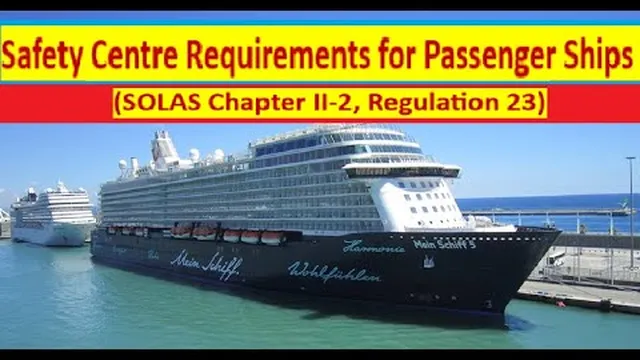
Safety Centre Requirements for Passenger Ships
Описание SEC.RU
По нашему материалу и сохранённой расшифровке.
Требования к безопасному центру на пассажирских судах по правилу 23 главы II-2 СОЛАС: область применения, назначение, расположение, связь, функции управления и мониторинга 17 систем безопасности, эргономика.
Passenger ships constructed on or after Passenger ships constructed on or after July 1st, 2010 shall have safety center July 1st, 2010 shall have safety center complying with the requirements of this complying with the requirements of this regulation.
Safety center requirements for passenger ships, SOLAS chapter 2-2, ships, SOLAS chapter 2-2, regulation 23.
Читать материал по расшифровке
Описание автора
Safety Centre Requirements for Passenger Ships (SOLAS Chapter II-2, Regulation 23)
The Safety Centre is a crucial space on a passenger ship designed to assist in managing emergency situations effectively. It ensures coordination of response measures, system control, and monitoring of critical ship functions.
1. Purpose
The Safety Centre is established to centralize emergency management and enhance coordination among crew members during emergencies, ensuring uninterrupted navigational duties while handling crises.
2. Location & Arrangement
The Safety Centre must be:
• Integrated into the Navigation Bridge, or
• Located in an adjacent space with direct access to the bridge to enable emergency management without distracting navigational officers.
3. Communication Requirements
Reliable communication must be maintained between the Safety Centre and:
• The Central Control Station
• Navigation Bridge
• Engine Control Room
• Fire-extinguishing system storage rooms
• Fire equipment lockers
This ensures swift response coordination for firefighting, damage control, and emergency evacuation.
4. Control and Monitoring Functions
The Safety Centre must maintain full operation, control, monitoring, or a combination of both for the following essential safety systems:
1. Powered ventilation systems
2. Fire doors
3. General emergency alarm system
4. Public address system
5. Electrically powered evacuation guidance systems
6. Watertight and semi-watertight doors
7. Indicators for shell doors, loading doors, and closing appliances
8. Water leakage detection for bow doors, stern doors, and shell doors
9. Television surveillance system
10. Fire detection and alarm system
11. Fixed fire-fighting local application systems
12. Sprinkler and equivalent fire suppression systems
13. Water-based fire-fighting systems for machinery spaces
14. Alarm to summon the crew
15. Atrium smoke extraction system
16. Flooding detection systems
17. Fire pumps and emergency fire pumps
5. Layout and Ergonomic Considerations
The design of the Safety Centre must follow ergonomic principles, ensuring:
• Efficient workspace layout for quick access to controls.
• Proper visibility and accessibility of system indicators.
• User-friendly interface for rapid response actions.
Conclusion
The Safety Centre is essential for coordinating emergency response, ensuring quick decision-making, and providing continuous monitoring of critical shipboard systems. By centralizing safety operations, it enhances passenger protection, crew coordination, and crisis management during emergencies.